THE ORIGINS OF INTERNATIONAL AESTHETIC MEDICINE
The History and Foundation of UIME
The history of the Union Internationale de Médecine Esthétique (UIME) is inseparably linked to the emergence of Aesthetic Medicine as an independent, scientifically oriented medical discipline in Europe during the 1970s.
At that time, medical treatments directed toward the preservation and restoration of physical appearance existed in several countries, but they were largely fragmented among dermatology, plastic surgery, endocrinology, nutrition, internal medicine, and other specialties. There was no unified international medical structure capable of defining the field, encouraging scientific exchange, or establishing common professional principles.
A small group of visionary European physicians recognized that this emerging area of medicine required its own scientific identity.
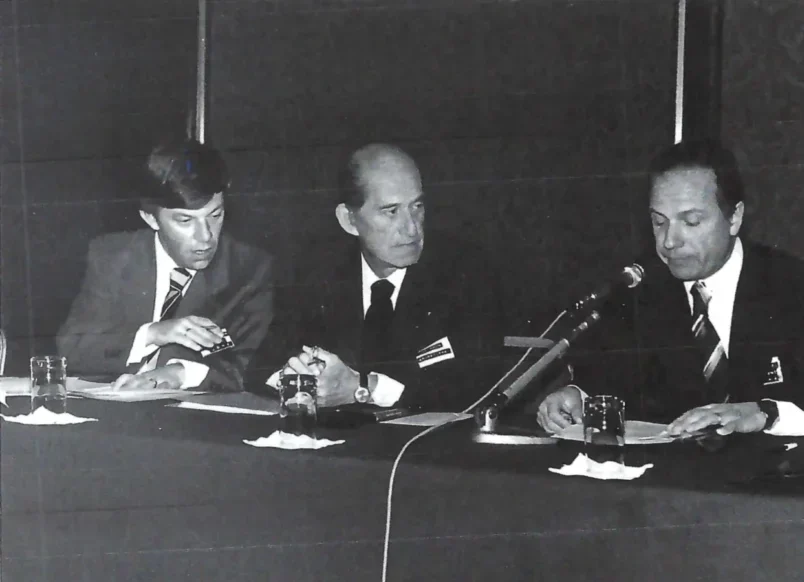
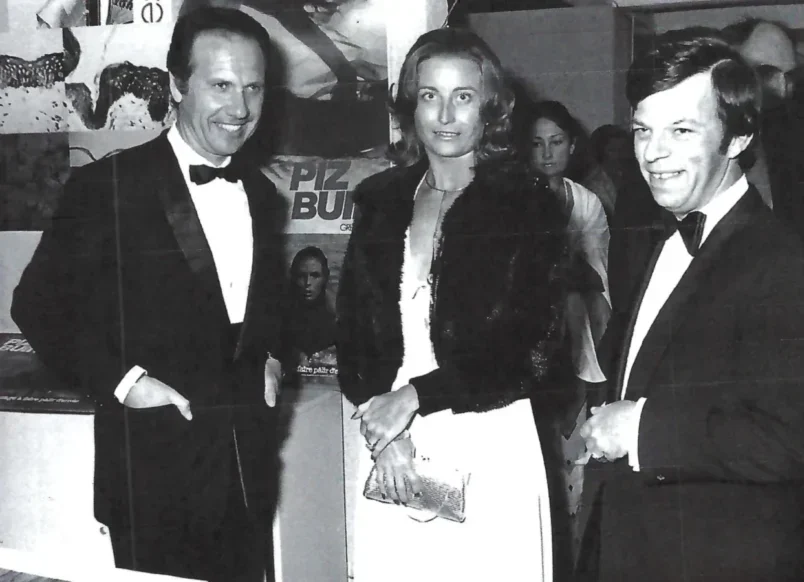
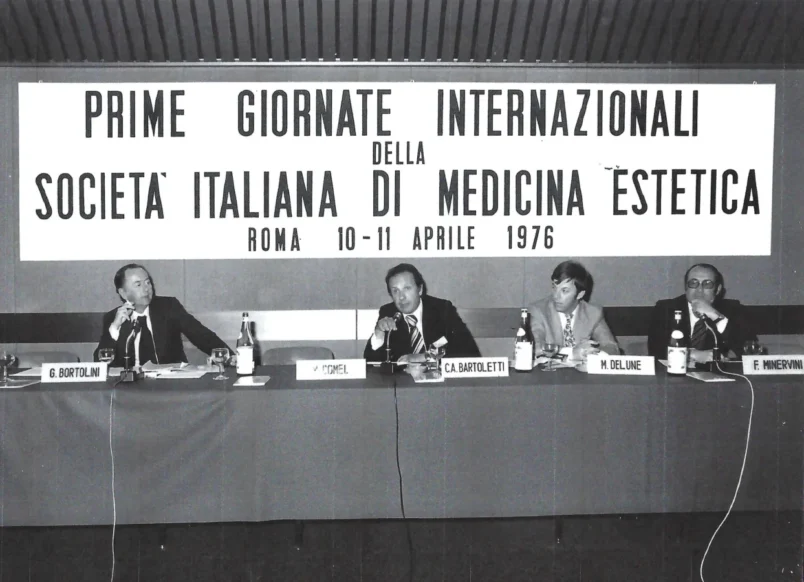
Among the pioneers who played a decisive role in this movement were Prof. Jean Jacques Legrand of France, Prof. Michel Delune of Belgium, Prof. Carlo Alberto Bartoletti of Italy and Prof. Josep Font-Riera of Spain.
Although they came from different medical backgrounds and national traditions, they shared a fundamental conviction: Aesthetic Medicine should develop as a medical discipline founded on scientific knowledge, clinical responsibility, professional ethics, education, and international cooperation.
Their collaboration ultimately led to the creation of the Union Internationale de Médecine Esthétique — UIME, establishing an international framework through which physicians and national scientific societies could work together.
1973 — FRANCE
The History and Foundation of UIME
A decisive moment occurred in Paris in 1973, when Prof. Jean Jacques Legrand founded the Société Française de Médecine Esthétique (SFME) – the French Society of Aesthetic Medicine.
This was one of the earliest major institutional steps toward establishing Aesthetic Medicine as an organized medical discipline.
Legrand’s vision went beyond cosmetic correction. He advocated an approach in which aesthetic concerns were evaluated and treated within a medical framework, with particular emphasis on scientific knowledge, prevention, patient assessment, safety, and professional responsibility.
The creation of the SFME provided a scientific and organizational model that would soon inspire physicians in other European countries.
Aesthetic treatment should not be separated from medicine. It should be practiced by medically trained professionals and developed through scientific education, clinical experience, research, and ethical standards.
This philosophy would become one of the intellectual foundations of UIME.
THE EUROPEAN MOVEMENT
The Expansion of the Movement Across Europe
The French initiative rapidly stimulated interest beyond France.
Physicians in Belgium, Italy, and Spain began organizing their own national structures and developing educational and scientific activities dedicated specifically to Aesthetic Medicine.
What had initially emerged as parallel national initiatives gradually evolved into an international movement.
The pioneers understood that the future of the discipline depended not only on the strength of individual national societies but also on their ability to communicate, exchange knowledge, compare clinical experience, and establish common scientific principles.
1973
1974
1975
1975
1976
1980
French Society of Aesthetic Medicine founded by Prof. Jean Jacques Legrand
Belgian movement develops under Prof. Michel Delune
Italian Society of Aesthetic Medicine founded by Prof. Carlo Alberto Bartoletti
First International Congress – Ajaccio, France
Formal establishment of UIME
Raúl Pinto — first UIME member from the American continent
THE FOUR PIONEERS
Founding Visionaries
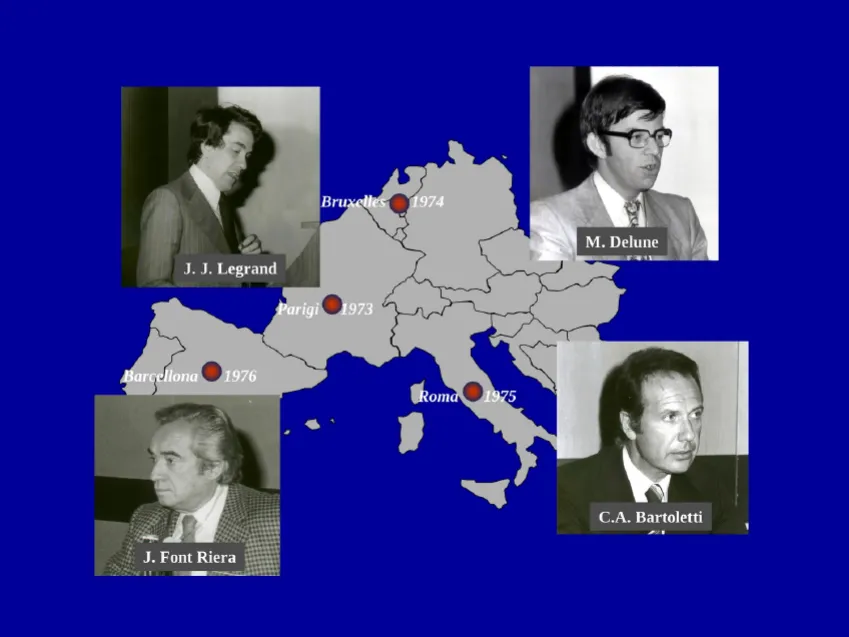
Prof. Jean Jacques Legrand
FRANCE
Founder of the French Society of Aesthetic Medicine
Prof. Jean Jacques Legrand holds a distinguished place in the history of modern Aesthetic Medicine. His pioneering work in France during the early 1970s contributed significantly to the emergence of Aesthetic Medicine as an organized medical discipline and to the development of the international scientific movement that would ultimately lead to UIME.
In 1973, in Paris, he founded the Société Française de Médecine Esthétique (SFME), one of the earliest major institutional milestones in the history of modern Aesthetic Medicine. Legrand promoted a concept rooted in medicine rather than purely cosmetic intervention, emphasizing prevention, patient assessment, scientific methodology, ethical responsibility, and the physician’s role in understanding aesthetic concerns within the broader context of health and aging.
His contribution extended beyond the creation of a national society. He belonged to the generation of physicians who helped give Aesthetic Medicine its institutional identity and established the principle that aesthetic treatment must remain fundamentally medical.
Prof. Michel Delune
BELGIUM
Dermatologist and International Educator
Prof. Michel Delune, a Belgian dermatologist, became one of the important figures in the international development of Aesthetic Medicine.
As a founding figure associated with the Belgian Society of Aesthetic Medicine, Delune strongly promoted education, scientific rigor, patient safety, and international professional collaboration. He is the founder and the president of the American Academy of Aesthetic Medicine (AAAM). He is also one of the founding members and past treasurer of the European Academy of Dermato Venerology (EADV).
His contribution to the creation of UIME was particularly important because he represented the principle that would become central to the Union itself: Aesthetic Medicine could advance most effectively through international scientific cooperation rather than through isolated national development.
Prof. Carlo Alberto Bartoletti
ITALY
Physician, Researcher and Founder of SIME
In Italy, Prof. Carlo Alberto Bartoletti became one of the most influential pioneers in the institutional and academic development of Aesthetic Medicine.
A physician with extensive training in Medicine and Surgery, Gastroenterology, Cardiology, Gerontology, and Geriatrics, Bartoletti brought a broad medical perspective to the emerging discipline.
In 1975, he founded the Società Italiana di Medicina Estetica (SIME) together with its scientific journal, La Medicina Estetica. In 1990, he promoted the International School of Aesthetic Medicine of the Fatebenefratelli Foundation, and in 1994 his continued efforts contributed to the establishment of an Ambulatory Service of Aesthetic Medicine at San Giovanni Calibita Hospital on Tiber Island in Rome.
Prof. Josep Font-Riera
SPAIN
Pioneer of Aesthetic Medicine in Spain
Prof. Josep Font-Riera represented Spain in the early international movement that contributed to the development of UIME.
His work introduced an especially important dimension to the philosophy of Aesthetic Medicine: the relationship between nutrition, health, aging, and physical appearance.
Rather than considering aesthetics exclusively as an external phenomenon, Font-Riera emphasized that the patient’s appearance is influenced by systemic health, metabolism, nutrition, lifestyle, and the biological processes of aging. The Spanish institutional movement later developed further with the establishment of the Sociedad Española de Medicina Estética (SEME) in 1984.
1976
The Creation of UIME
As national movements developed across Europe, the need for an international organization became increasingly evident.
The pioneers from France, Belgium, Italy, and Spain shared the belief that Aesthetic Medicine required a permanent international scientific structure capable of bringing national societies together.
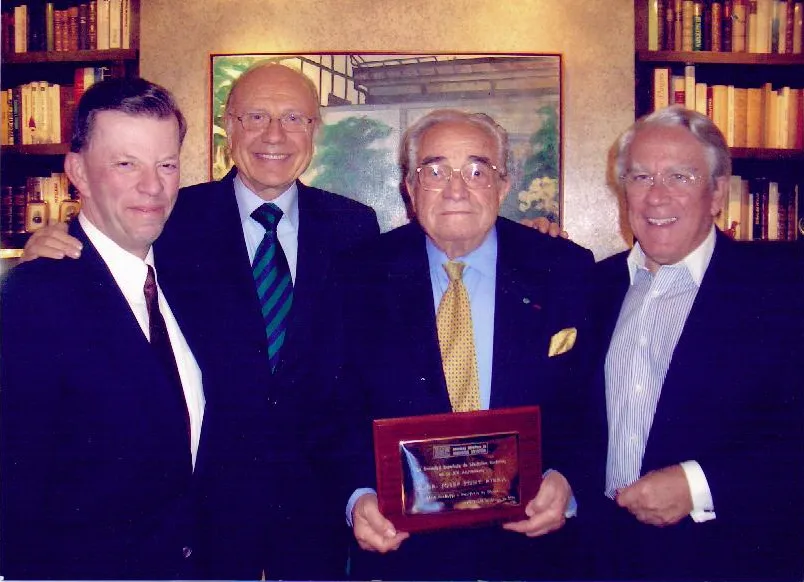
Their discussions and collaboration culminated in the establishment of the UNION INTERNATIONALE DE MÉDECINE ESTHÉTIQUE (UIME) in the mid-1970s, with 1976 marking the formal establishment of the international Union.
UIME represented something unprecedented in the young history of the discipline. For the first time, national societies of Aesthetic Medicine could participate within a common international organization dedicated specifically to the scientific, educational, ethical, and professional advancement of Aesthetic Medicine.
The creation of UIME transformed a European pioneering movement into an organized international medical community.
AN INTERNATIONAL STRUCTURE
A Union of National Scientific Societies
From its beginnings, UIME was conceived not merely as an association of individual practitioners, but as an international union bringing together national scientific societies of Aesthetic Medicine.
This organizational principle gave UIME a distinctive role.
Each national society could preserve its own scientific traditions and professional identity while participating in a broader international framework.
Through UIME, physicians from different countries could exchange clinical experience, discuss new therapeutic approaches, develop educational initiatives, and contribute collectively to the evolution of the specialty.
The Union therefore became a bridge between national medical communities.
AJACCIO, FRANCE - 1975
The International Congresses
Scientific congresses became one of the principal instruments through which the new international community developed.
The First International Congress of Aesthetic Medicine was held in Ajaccio, France, in 1975.
It was followed by international congresses in major cities throughout Europe, the Americas, and later other regions of the world.
These meetings created a unique international forum where physicians could present clinical experience, discuss emerging technologies, evaluate therapeutic approaches, and establish professional relationships across national borders.
Over time, UIME congresses became part of the historical infrastructure through which knowledge in Aesthetic Medicine was disseminated internationally.
GLOBAL DEVELOPMENT
From Europe to a Global Medical Community
During the following decades, UIME expanded beyond its European origins.
National societies and physicians from the Americas, Asia, and other regions became increasingly involved in the international network.
In 1980, Dr. Raúl Pinto became the first UIME member from the American continent, symbolizing an important stage in the transformation of UIME from a predominantly European organization into a genuinely international medical union.
As Aesthetic Medicine itself evolved, the scientific scope of the Union also broadened.
The discipline progressively incorporated advances in dermatology, injectable therapies, chemical peels, laser and energy-based technologies, regenerative approaches, prevention and management of aging, nutrition, body treatments, and minimally invasive medical procedures.
Aesthetic Medicine must develop through medicine, science, education, ethics, and patient safety.
THE FOUNDING LEGACY
The Principles That Endure
The historical importance of UIME lies not only in the creation of an international organization, but also in the medical philosophy established by its pioneers.
Prof. Jean Jacques Legrand, Prof. Michel Delune, Prof. Carlo Alberto Bartoletti and Prof. Josep Font-Riera represented different countries and different areas of medicine, yet they shared a common vision.
MEDICAL IDENTITY
Aesthetic Medicine required a clearly defined medical foundation.
SCIENTIFIC EDUCATION
Progress required structured learning, research and exchange.
ETHICAL RESPONSIBILITY
Patient safety and professional responsibility had to remain central.
INTERNATIONAL COLLABORATION
Knowledge would advance faster when physicians worked across borders.
PATIENT CARE
Aesthetic treatment must remain inseparable from health and individuality.
SCIENTIFIC PROGRESS
New techniques should be integrated through rigorous medical judgment.
Technology changes. Techniques evolve. Scientific knowledge expands. But the fundamental responsibility of the physician remains constant.
The history of UIME is therefore more than the history of an organization.
It is part of the history of Aesthetic Medicine itself – the story of how a pioneering European medical movement evolved into an international scientific discipline united by knowledge, education, ethics, and a shared commitment to excellence in patient care.
The pioneers created the foundation.
Generations of physicians expanded the vision.
UIME continues the legacy.